Idaho town sees major tech investment with new data center


On September 3rd, I was privileged to attend the grand opening of Meta’s new data center in Kuna, Idaho. It was a gathering of community members, stakeholders, and policy experts to unveil the new project. What was striking about the event was the celebratory atmosphere. A far cry from the curious doom and gloom some paint data centers with.
What exactly is a data center?
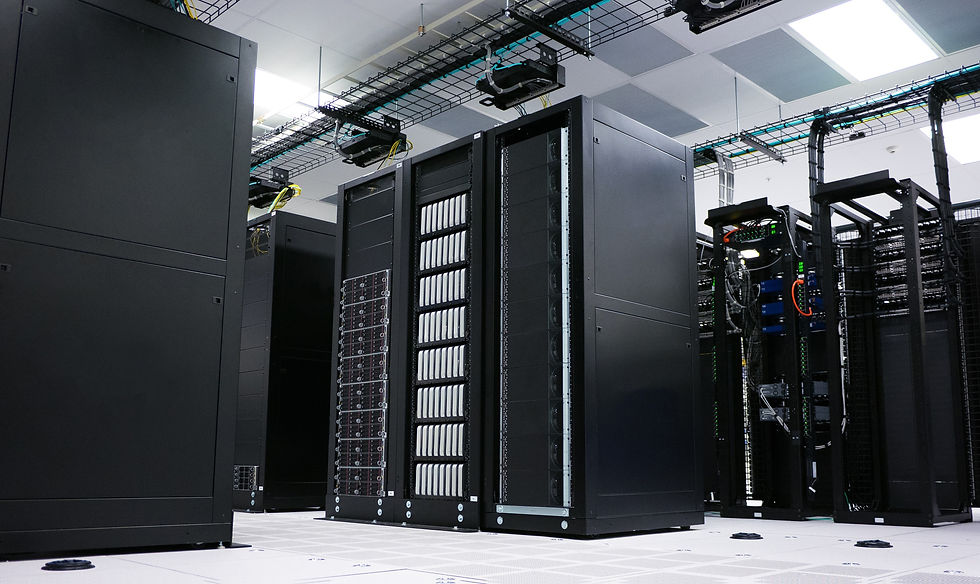
Data centers act as the physical computing infrastructure of apps like Facebook, Instagram, WhatsApp, as well as AI models. It’s not just a place to store photos on social media apps; these computer server warehouses connect people, help small businesses, and promote overall economic productivity.
As for the new data center in Kuna, there were close to 1,600 jobs created during peak construction. It is estimated that there will be around 100 permanent jobs needed on site, including electricians, HVAC specialists, server and network techs, and engineers. Meta has worked with local officials, including Kuna’s mayor, Joe Stear, since breaking ground in 2022.
That partnership and collaboration resulted in Meta rewriting its original cooling water plans and instead choosing a closed water loop design that consumed 87 times less water. Through this system, there is zero operational water use for the majority of the year, and Meta hopes to eventually be net water positive by 2030.
As part of the project, Meta built a brand new $100 million water and wastewater infrastructure for the city of Kuna that fully pays for the data center’s impact. They also signed President Trump’s Ratepayer Protection Pledge earlier this year, which promises that energy bills don’t go up for local residents due to a data center’s energy use in places like Kuna.
Meta has heavily invested in the Kuna community. It has contributed more than $1.5 million to Ada County schools and local nonprofits. $200,000 of the financial commitment was directed towards a new robotics lab and engineering lab at Swan Falls High School, STEM technology upgrades across 6 elementary schools, and training for educators and tutors to support workforce and postsecondary readiness. Meta wants to encourage STEM education, hoping to train future employees at Kuna’s data center, and also prepare Ada County’s students for emerging job markets that are developing due to AI.
Data centers continue to have a large economic impact on communities around the country. For example, in Loudoun County, Virginia, residents have seen a complete economic and public transformation. Hundreds of millions of dollars have been invested in public projects and parks due to the county’s skyrocketing revenue from the data center’s property taxes.
This has facilitated residential property taxes being slashed by 30%. Over in West Virginia, Governor Patrick Morrisey is proposing to eventually eliminate the state income tax and backfill the revenue with data center tax collections. Data centers continue to bring economic prosperity to communities through increased tax revenues, employment creation, local investment, and development.
Unfortunately, this comes at a time when data centers have come under growing criticism. There is a strong debate on multiple issues, including their use of electricity and water, their impact on infrastructure, and their effects on surrounding communities. Due to this, data center moratoriums and pauses have been imposed by governments from New York to Texas. Understanding the facts behind these concerns is increasingly important as states decide whether to welcome or restrict this investment.
Once elected officials look into the realities of these issues, the next question is: how do they attract data centers to their area? The free market answer is not to pick winners and losers, but to treat data centers like any other business. It is important to remember that exempting business inputs from sales tax is not a subsidy. Taxing business inputs results in tax pyramiding and hidden costs for consumers.
Meta’s data center project in Kuna should be a case study to ease the worries of residents and lawmakers. Data centers promote innovation, bring an economic boom, and work to minimize their impact as much as possible. It was inspiring to see a 750,000-square-foot data center in what previously was a very rural area. What used to be an empty lot is now a vital part of the technological revolution that is fueling America’s economy.