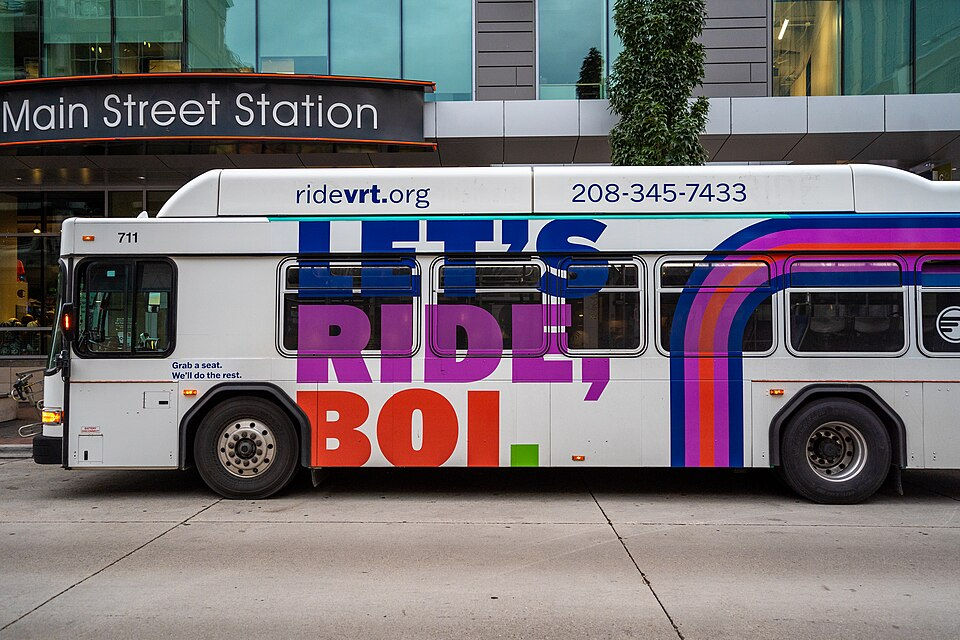
How to improve transit in Idaho's Treasure Valley


Idaho's Treasure Valley is often cited as one of the best places to live in the United States. As a result, the region is experiencing significant growth far surpassing past projections and estimates. For example, COMPASS, the Boise Metro Area’s Metropolitan Planning Organization, previously projected population in Ada and Canyon Counties would reach 825,000 by 2030. Yet official Census numbers from last year already measure population within the two counties at 821,264, with more businesses and people moving to Idaho every day.
As a result, traffic congestion and delays have increased substantially. Between 2019 and 2026, traffic delays increased on I-84 Eastbound into downtown increased 83% during the 8:00 AM rush hour, while delays during the evening rush hour heading Westbound surged 182% (based on INRIX analysis).
Yet despite the added travel demand from rapid population and employment growth, public transit demand has plummeted. In 2019, Valley Regional Transit (VRT), the region’s transit agency, registered 1.26 million passenger trips on its buses. Yet by 2025, the agency counted just 956,000 bus passengers, a -24% decrease.
Even with fewer customers, however, costs for transit have increased, resulting in a higher cost to carry a passenger on VRT buses. Between 2019 and 2023, the latest full year of financial data available, costs to operate VRT buses jumped from $10.9 million to $14.5 million, a 33% increase, leading to an unsustainable financial future.
As a result of runaway costs and lower bus ridership, some cities in the Treasure Valley have opted out of VRT services. Nampa significantly lowered its commitment to VRT services, providing just $283,000 of VRT’s funding request of $860,000 in 2026.
In short, public transportation operations as they are currently offered in the Treasure Valley are unsustainable and are likely to collapse unless drastic reforms are enacted. Reform options could include:
Tie funding to performance – Cost per bus platform hour and cost per passenger trip are similar to or below peer agencies. For example, the Spokane Transit Authority in Spokane, Washington spent $9.70 to carry one passenger on an STA bus in 2023, while VRT’s cost per passenger was $14.68 that same year, 51% more than Spokane’s cost. Reducing costs would then free up money to provide more service and reach more customers.
Right-size the fleet and services - VRT services are designed to serve the public. A better focus might be to include more Park and Rides for commuters and smaller vehicles for maximizing vanpooling, services which better fit the suburban nature of the Treasure Valley.
Keep labor costs low – Vehicle Operations are about 50% of VRT’s operating expenses, of which labor is typically the primary cost driver. Working with unions and workers to lower the cost of operations would free up money to be able to provide more service where it is needed.
Keep administration costs low – Administration represents about 35% of VRT’s operating expenses according to the National Transit Database. In comparison, Spokane’s transit agency currently spends 20% of expenses on administration. Reducing administrative overhead would help bring VRT’s finances back into sustainability and keep service on the road.
Improve cost recovery – In 2023, bus riders paid approximately $680,000 of the $14,523,000 to operate the buses, less than five percent. This places an overwhelming burden on taxpayers to cover the other $13.8 million to fund the bus system, who may or may not be willing to support an underutilized system. It’s not uncommon for transit agencies to target 20%-25% farebox recovery covered by users of the system in terms of fares. Increasing the farebox recovery rate to 25% would save taxpayers nearly $3 million per year that officials could use to reinvest in the transit system without raising taxes.
A strong transit system in Idaho’s Treasure Valley would greatly improve mobility, but as it stands today, the program desperately needs an overhaul. From skyrocketing costs to low productivity, officials should continue to reform the agency to better meet the demand for riders of the system.