Rebuilding civic participation in the Mountain West


Civic participation in the United States has been weakening for years, and rural states like Montana, Idaho, and Wyoming feel those effects more intensely. There have been long-term declines in trust in government and lower rates of consistent civic engagement outside of major election cycles. Even when turnout rises in presidential elections, participation in local governance, such as school boards, city councils, and public meetings, often lags.
Data from the U.S. Census Bureau similarly shows that while volunteering remains relatively stable, fewer Americans are engaging in the kinds of civic activities that directly shape public policy.
In states like Montana, Idaho, and Wyoming, where smaller populations mean each individual’s participation carries more weight, these trends are especially significant. Local institutions depend heavily on citizen involvement, and when that weakens, the effects are more visible and more immediate.
That’s what makes Governor Gianforte’s support for “Two Lights Montana” not just a symbolic initiative, but an attempt to rebuild civic habits at a moment when they are under real strain. But for that effort to succeed, it needs more than awareness. It needs clear, sustained pathways into participation, especially for younger generations who are least likely to engage consistently in civic life.
Idaho’s America 250 Service Challenge has similar goals in how civic participation can be strengthened through structured, community-based engagement. By mobilizing more than 250,000 acts of volunteer service across 166 cities, the initiative demonstrates that civic habits can still be rebuilt when participation is made local.
Wyoming has faced many of the same civic challenges affecting rural Western states, including declining trust in institutions and lower participation in local governance. In response, Governor Mark Gordon has emphasized direct community engagement, participating in more than 250 community events – public meetings, town halls, school visits, and civic events across the state.
In a geographically large and sparsely populated state like Wyoming, these face-to-face interactions carry particular importance, as they are often among the few opportunities residents have to engage directly with state leadership.
Still, the central challenge is sustainability. While communities with higher civic literacy and local involvement tend to have stronger economic and social outcomes, those benefits depend on long-term and consistent engagement. A single year of heightened awareness and public messaging based on the 250th anniversary of the United States is unlikely to reverse decades-long declines on its own.
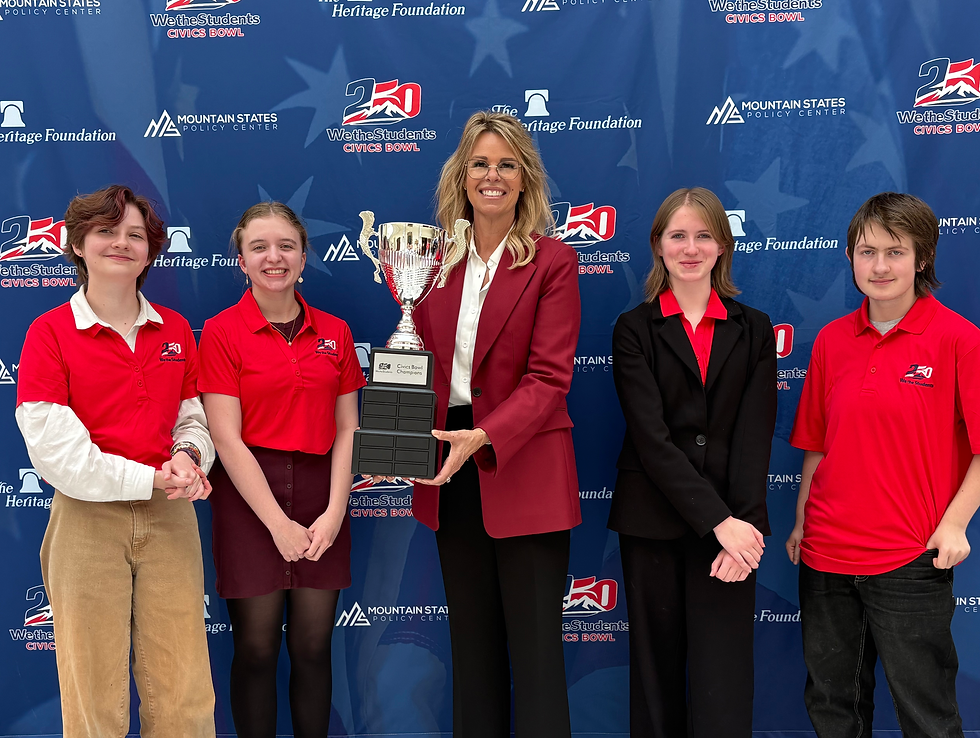
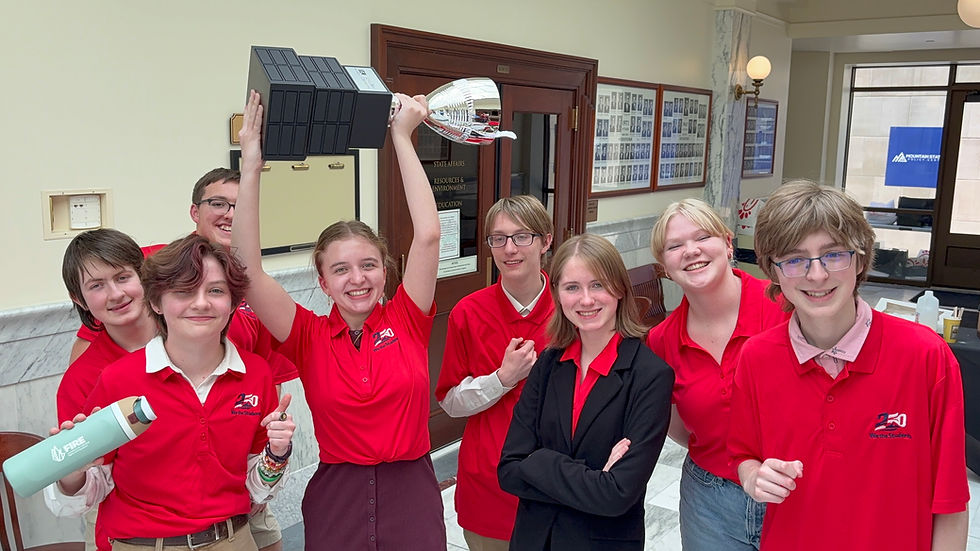
Programs like the Civics Cup and the Sawtooth Leadership Academy, developed by the Mountain States Policy Center, offer a more concrete model of how those pathways might be built. The Civics Cup (also referred to as “We the Students”) introduces high school students to American government through competitive, team-based learning, where they actively engage with the Constitution, public institutions, and the mechanics of self-government rather than passively memorizing them.
By turning civics into something participatory and social, it can address the common issue in research of traditional civic education, which often feels abstract and disconnected from real life.
The Sawtooth Leadership Academy builds on that early exposure by shifting from learning about civics to practicing it. Students don’t just study policy, but they produce it. Participants take part in courses led by political and business leaders, help organize public debate events, and write original policy studies that are published and even voted on by the public.
This is a significant step beyond most youth civic programs because it places students directly into roles that define real civic participation. It also introduces incentives, like scholarships and public recognition, that reinforce sustained engagement over time.
Taken together, these programs are notable for their structure of creating a progression of exposure and interest in the community. Students may learn about government in school, but they rarely transition into ongoing participation. MSPC’s model attempts to close that gap by institutionalizing a pipeline from education to action.
In the context of encouraging civic engagement, this kind of pipeline is especially relevant. A statewide initiative can raise awareness, but programs like the Civics Cup and Sawtooth Leadership Academy show how that awareness can be converted into durable habits: learning how institutions work, practicing civic skills, and engaging in real policy conversations.
For rural states like Montana, Idaho, and Wyoming, where civic participation has an outsized impact on local governance, these kinds of structured entry points may be one of the few scalable ways to reverse long-term disengagement. At the same time, their impact depends on reach and continuity. These programs are selective and relatively small by design, which allows for depth but limits scale.
If “Two Lights Montana," Idaho's America 250 Service Challenge, or the 250 community events in Wyoming are to succeed, the challenge will be extending this model beyond a subset of highly engaged students by embedding similar opportunities across schools, communities, and local institutions so that civic participation becomes normalized.